


Otters, Eagles and wildlife photography on the West Coast of Scotland — Why We Call This Place Home

Why did I choose this title for the blog - Otters, Eagles and wildlife photography on the West Coast of Scotland — Why We Call This Place Home. Let me explain.
I had dropped the children at school. It was a lovely morning — one of those West Coast mornings when the light comes low and clear across the water and everything seems very still. The tide was rising, and I knew exactly where I wanted to be.
There was a female otter I had been watching for a long time. I knew her well — her patterns, her preferred stretches of shore, the way she fished a particular piece of coastline. She had two cubs that year, still young, still dependent. And she had something else: her daughter from the previous year, now nearly grown, who had stayed on to help. It’s not widely known that female otters sometimes do this — that older cubs will remain with their mother and assist in raising the next litter. But when you’ve spent thirty years watching these animals on a coastline you know intimately, you see things that don’t make it into the field guides.
I positioned myself where I thought she’d be and settled in to wait. And there she was — laid quietly in the kelp just above the tideline, barely visible, utterly at ease. Further along the shore, on a flat rock, her daughter was resting too, the two youngsters sprawled nearby. She was doing, I thought, exactly what I was doing. Enjoying a moment of quiet without the children.
What otters actually need — and why most people never see them properly
There is something important to understand about otters, and it’s the reason that most people who see them only ever get a brief glimpse before the animal slips back into the water.
Unlike seals or other marine mammals, otters have no blubber and no waterproof undercoat. Their insulation is entirely dependent on their fur being clean, dry and properly groomed. After fishing — which burns enormous energy in cold water — they must come ashore, shake off as much water as they can, and then spend considerable time rolling and grooming in the vegetation, working the salt out of their coat. Then they rest. They lie still in whatever warmth the sun offers and allow themselves to dry fully before they fish again.
If you approach an otter that is resting and grooming and cause it to return to the water before it has dried properly, you are not simply missing a photograph. You are doing the animal genuine harm. Over the years I have missed more shots than I can count by doing the right thing and staying back. The otter’s welfare always comes first. That is not a rule we follow — it is simply how we think.
So I sat. And I watched. For over an hour I watched her lie in the kelp, grooming slowly, resting, occasionally lifting her head. I had my camera — I always have my camera — but I didn’t raise it. I waited.
The moment
After more than an hour, she got up. Stretched — that long, unhurried otter stretch. And that, apparently, was the signal. The two cubs came scampering over from where they’d been resting with their older sister, and what followed was one of those scenes that I have no adequate words for. Family. Pure, unguarded, joyful family — rolling and chasing and piling on top of each other along the shoreline, the older sister joining in, the mother tolerant and calm in the middle of it all.
Did I get the shot? No. I put the camera down. I sat and I watched and I let it be what it was. Some moments are not improved by a lens between you and them, and this was one of those moments. No photograph would have done it justice, and I didn’t try to take one.
I have thought about that morning many times since. It is, I think, the clearest illustration I have of what it means to truly know a place and the animals in it. Not just where to look, but how to be. How to wait. How to recognise the moment when something is happening that is bigger than photography.
Why Scotland’s West Coast is unlike anywhere else in Britain for wildlife and wildlife photography
Peter and I spent thirty years living and working on Scotland’s West Coast. Not visiting. Living. Raising a family here, learning the tides and the seasons and the behaviours of the animals that share this landscape. That is a different kind of knowledge to what you acquire on a recce trip, however thorough.
The West Coast of Scotland is one of the finest wildlife habitats in Europe. The extraordinary fragmented coastline — all those sea lochs, islands, rocky peninsulas and sheltered bays — creates an ecosystem of exceptional richness. The otters here are coastal otters, not river otters, and they behave quite differently: fishing in salt water, ranging along the shore, tied to the tides in ways that, once you understand them, make encounters reliable rather than lucky.
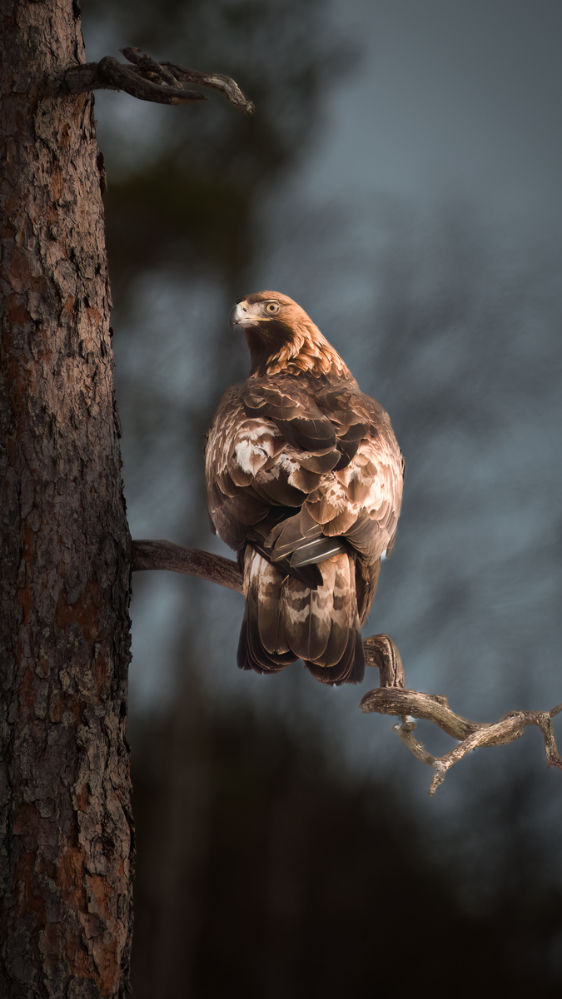
Above the shoreline, golden eagles patrol the ridges and white-tailed sea eagles — the largest raptor in Britain, with a wingspan that stops you breathing for a moment the first time you see it — hunt the coastal waters. Red deer move through ancient woodland. Pine martens, one of the most beautiful and elusive of Britain’s mammals, are here too, and on our West Coast Wildlife Week they visit the cottage at dusk, sometimes just metres from the window.
Red squirrels live in the old woodland. In September, when we run our week, the red deer rut is beginning and the stags are magnificent. The light at this time of year — low, golden, slanting across the water and the hill — is some of the finest light for photography that I know.
What makes our trips different
We lived here! we have as I said previously lived experience, through every season, in every weather - for 30 years.
We know which stretch of shoreline a particular family of otters works at which state of the tide. We know where the white-tailed eagles will be on a still September morning. We know the woodland where the red squirrels feed, the loch bank where the pine martens emerge at dusk, the ridge where the golden eagles hunt in autumn. This knowledge was not acquired on a recce. It was built, slowly and carefully, over decades of daily observation.
We also take a maximum of three guests on our West Coast week. Three. Not eight, not twelve. Three photographers, so that every encounter is personal, every moment of guidance is directed at you, and the wildlife is never overwhelmed by the presence of a group.
And we do it from a base that is itself part of the experience — a cottage on the banks of a loch where otters sometimes appear on the water below the window, and pine martens visit the garden in the evenings while you’re sitting by the wood-burning stove with a glass of single malt.
You don't have to worry about your meals, everyone is provided for you.
Scottish West Coast Wildlife Week — practical details
Our 2026 dates for11–16 September and 17–22 September, are already full. So, we have added two more weeks :
26 September - 1 October
1 October - 5 October
Here is what the week offers:
• Otter tracking along lochs and coastlines, guided by thirty years of knowledge of these specific animals and this specific landscape
• A boat expedition on the sea lochs around the Movern Pennisula, with close encounters with white-tailed sea eagles hunting and soaring over the water. Apart from seeing these amazing birds, the backgrounds for photography are perfect
• Golden eagle watching on the mountain ridges
• Red squirrels in ancient woodland
• Red deer in their autumn environment, with the rut just beginning
• Pine martens visiting the cottage garden at dusk — just metres from the window
• Five nights in a fully catered cottage on a Highland loch, with home-cooked food, a wood-burning stove, and a dram of single malt each evening
• Maximum three guests — this is an intimate, personal week, not a group tour
• Cost: £1,120 per person (£300 deposit to secure your place)
All levels of photographer are welcome — from those picking up a telephoto for the first time to experienced wildlife photographers seeking access to species and locations they couldn’t find alone.
Places are limited to three guests per week. For full details and to reserve your place, visit our trip page or get in touch directly at www.boswellwildlifephotography.com/otter-adventures
Here are some images taken on these weeks


Thank you for reading! Hope to see you soon
Tina Boswell
Boswell Wildlife Photography
Comments